
A Benchtop centrifuge speeds laboratory workflows by rapidly pelleting cells, clarifying samples, and enabling parallel processing of dozens of tubes to cut batch times. Higher g‑forces and programmable profiles reduce run durations and repeats, while quick‑lock rotors, auto‑brake, and imbalance detection lower hands‑on time. Proper placement, matched rotors, and standard operating notes maximize throughput. Routine maintenance and safety practices preserve uptime. Continue for practical steps, feature choices, and maintenance tips that extend efficiency.
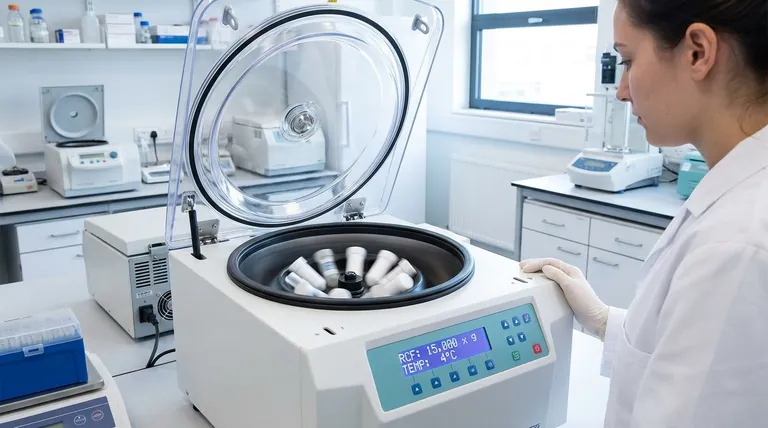
Tasks That Benefit Most From a Benchtop Centrifuge
When separating components by density https://laballiance.com.my/, a benchtop centrifuge excels at rapidly pelleting cells, clarifying samples, and isolating subcellular fractions.
Laboratories focused on routine culture work rely on it for harvesting microbial or mammalian cells with minimal hands-on time, preserving sample integrity.
Clinical and environmental labs use centrifugation to clarify bodily fluids or field-collected suspensions, enabling downstream assays.
Molecular biology workflows benefit when separating nucleic acids or protein complexes from lysates prior to purification.
Small-scale fractionation of organelles supports exploratory projects without large infrastructure.
Quality control tasks, such as checking particulate contamination in reagents, are streamlined.
How Benchtop Centrifuges Speed Processing (Mechanisms & Time Savings)
Having established which tasks gain the most from a benchtop centrifuge, the discussion now turns to the specific mechanisms by which these devices accelerate workflows and the quantifiable time savings they deliver. Centrifugation separates components rapidly through centrifugal force, shortening protocols that would otherwise rely on slow gravity settling.
Consistent run cycles minimize repeat steps, and parallel processing of multiple samples reduces overall batch time. Time savings translate into greater experimental freedom: schedules become flexible, throughput increases, and bottlenecks shrink.
- Higher g-forces: faster phase separation, fewer incubation minutes.
- Batch capacity: dozens of samples processed simultaneously, cutting cumulative handling.
- Predictable cycles: reduced variability, fewer repeats and faster project turnarounds.
Benchtop Centrifuge Features That Cut Hands‑On Time
Because routine tasks demand both speed and minimal intervention, benchtop centrifuges incorporate features that directly reduce hands‑on time. Automatic imbalance detection, programmable run profiles, and quick-lock rotors minimize setup and monitoring, enabling operators to step away confidently.
Intuitive touchscreen controls and preloaded protocols cut decision time and training needs, while remote start/stop and status alerts free staff to perform other duties.
Rapid-access lids and tool‑free rotor changes shorten sample swaps, and compact footprint with easy-clean surfaces reduces maintenance intervals.
Integrated timers and auto‑brake functions eliminate constant supervision, and barcode-compatible sample tracking streamlines documentation.
Collectively, these elements grant users operational freedom, letting labs maintain throughput without continuous manual intervention.

Fitting a Benchtop Centrifuge Into Your Workflow (Practical Steps)
A lab manager should first map routine procedures and identify where centrifugation steps occur, noting sample types, volumes, throughput, and timing constraints.
They then evaluate bench space, power access, and workflow adjacency to minimize transport and idle time.
Selection aligns rotor types and tube capacity with anticipated runs, preserving flexibility for varied assays.
Staff schedules are adjusted to exploit off-peak cycles, reducing bottlenecks while maintaining experimental freedom.
Standard operating notes specify loading patterns, run presets, and sample labeling to streamline progression between tasks.
Implementation proceeds in phases with feedback loops to refine placement and protocols.
- Pilot placement near primary workstations.
- Match rotor/tube combos to common assays.
- Schedule staggered runs to avoid queuing.
Maintenance & Safety Habits to Preserve Efficiency
Once the benchtop centrifuge is integrated into daily routines, maintaining its condition and enforcing safe habits becomes the foundation of sustained efficiency. Routine inspections, timely cleaning, and calibrated performance checks prevent downtime and preserve autonomy over workflow.
Operators document runs and note irregularities, enabling quick corrective action without bureaucratic delay. Proper rotor handling, balanced loads, and secure tube seals reduce risk and prolong equipment life.
Training emphasizes clear protocols and empowers staff to halt operations when hazards appear. A minimal, consistent maintenance schedule aligns freedom-seeking labs with reliability: fewer surprises, more control.
Consumables are stocked proactively; service contracts are negotiated to preserve flexibility. Safety signage and incident reporting close the loop, sustaining efficient, liberated laboratory practice.
Conclusion
In conclusion, the benchtop centrifuge consistently proves a pivotal tool for streamlining laboratory operations. By accelerating separations, consolidating batch processing, and minimizing manual interventions, it reduces turnaround times and frees skilled staff for higher‑value tasks. Features such as quick‑spin presets, balanced rotors, and compact footprints integrate smoothly into workflows when coupled with routine maintenance and strict safety practices. When deployed thoughtfully, the benchtop centrifuge sustains productivity gains and reliable results across diverse lab settings.